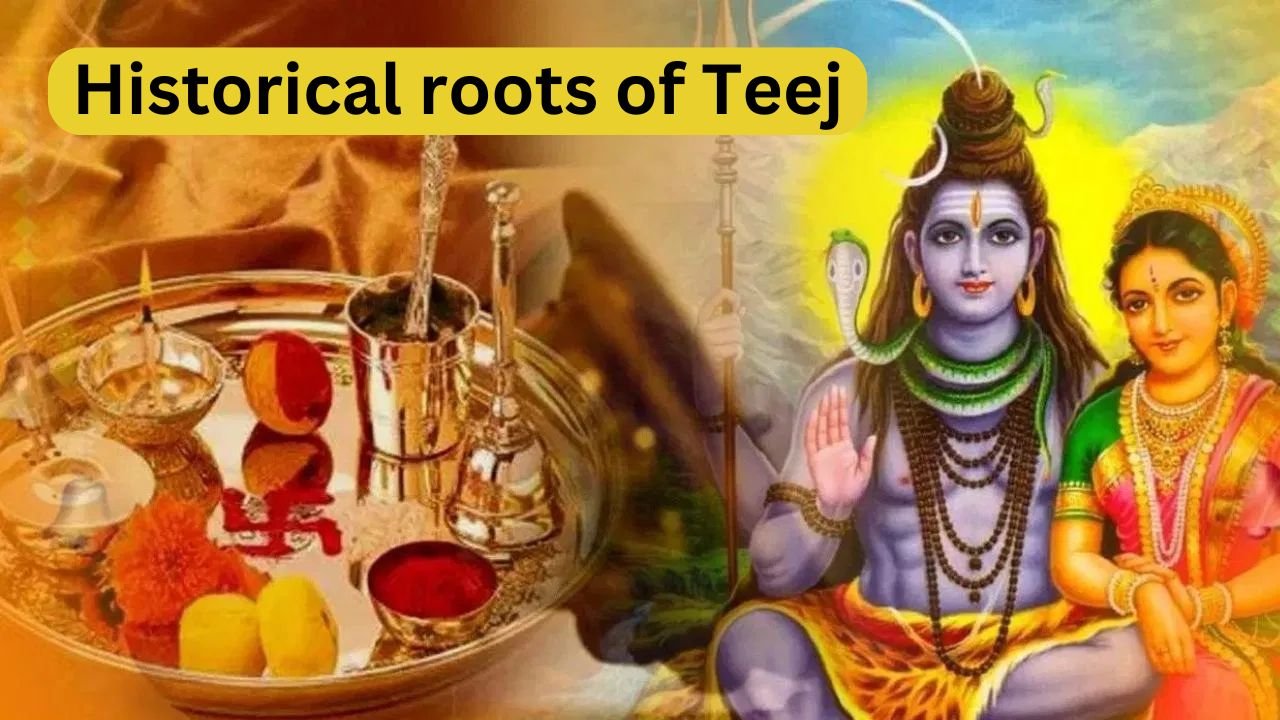
The historical roots of Teej are deeply intertwined with Hindu mythology, cultural traditions, and the celebration of nature’s cycles. Teej, particularly Hartalika Teej, holds significant religious and cultural importance in India and Nepal, dating back centuries. Here’s a closer look at its origins:
1. Mythological Origins: The Story of Goddess Parvati and Lord Shiva
The origins of Teej, especially Hartalika Teej, are grounded in the story of Goddess Parvati’s determination to marry Lord Shiva. According to Hindu mythology, Parvati wanted to marry Shiva, but her father, King Himalaya, had other plans and intended to wed her to Lord Vishnu. To prevent this, Parvati’s friend (Aalika) abducted her and took her into a dense forest where Parvati undertook a severe penance (tapasya) to please Shiva.
After years of intense austerity, Shiva was moved by her devotion and accepted her as his wife. Hartalika Teej commemorates this divine union and Parvati’s undying resolve to marry Shiva. This tale makes the festival especially important for women who fast and pray for the well-being of their husbands or to find a life partner like Shiva.
2. Cultural and Agricultural Significance
Teej is celebrated during the monsoon season, a time of renewal and fertility, aligning with the agrarian lifestyle of ancient Indian societies. As an agricultural festival, Teej was a way for people to celebrate the arrival of rains that would bring abundance and prosperity to their lands. The rain symbolized the earth’s fertility, much like Parvati’s devotion symbolized the strength and purity of womanhood.
3. Association with the Lunar Calendar
Hartalika Teej falls on the third day of the bright half of Bhadrapada, a month in the Hindu lunar calendar. The timing aligns with seasonal transitions, and this has made Teej an important cultural marker, celebrated with rituals that have been passed down for generations.
4. Evolution of Social and Marital Traditions
Historically, Teej became a social festival that reinforced marital values and the sanctity of marriage. It has been especially significant in patriarchal societies where women’s devotion to their husbands is viewed as integral to maintaining social harmony and family prosperity. Over time, the festival grew beyond its religious roots, becoming a symbol of feminine resilience and bonding among women.
Teej celebrations often include gathering in groups, dancing, singing, and performing rituals together, which have deepened the festival’s role as a community-building event. This tradition allowed women, especially in earlier times when they had fewer public roles, to connect and support one another.
5. Regional Variations and Spread
Teej began as a festival in the northern and western parts of India, particularly in Rajasthan, Bihar, Uttar Pradesh, and Madhya Pradesh. As time passed, it spread to neighboring countries like Nepal, where it took on additional cultural layers. In Nepal, it’s one of the most significant festivals, celebrated with national holidays and large gatherings.
In regions like Rajasthan, Teej festivals often involve colorful processions, where the idol of Goddess Parvati is taken through the streets, accompanied by music and dancing, reflecting the vibrant and joyous nature of the celebration.